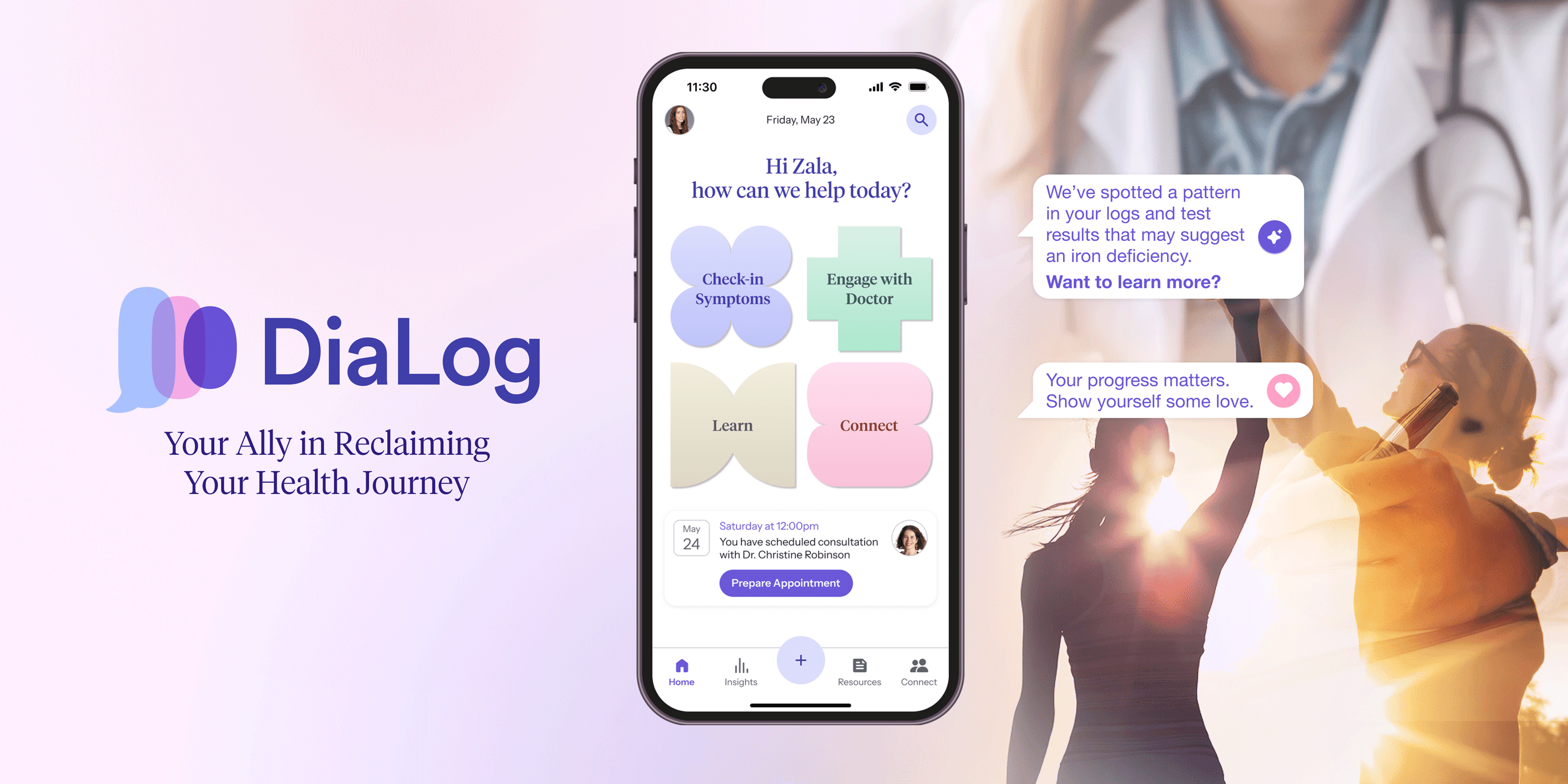
In the UK, 5.8 million women are trapped in "diagnosis limbo"—not because their symptoms aren't real, but because the system was never designed to understand them.
"Diagnosis limbo" is the prolonged uncertainty between knowing something's wrong and knowing what it is. It can last months, years, or a lifetime. Women disproportionately find themselves here, facing delayed or dismissed diagnoses that cost them relationships, careers, and mental health.
DiaLog was our response to the 2025 Student Service Design Challenge proposed by Philips. Eight teams were selected from 160+ proposals. Our team won first place. We were later awarded Best Student Project 2025 by the Service Design Network (SDN).
Philips' design brief: Design a self-care service that transforms self-confidence from a personal journey into a shared, evolving experience.
Our question: How might we support women experiencing diagnosis limbo to sustain meaningful self-care practices when the healthcare system offers no clear path forward?
Our team of seven service designers worked through four rounds of competition submissions and a final Dragons' Den-style pitch. I project-managed the process, coordinating timelines, structuring meetings, managing stakeholder communications, and keeping us aligned through six months of iteration.
But I was first and foremost a designer. I owned primary research with patients, led problem framing, built our business model canvas, developed the service blueprint, and created the competitive analysis and empathy mapping that grounded our solution in real world needs.
The project was a true collaboration, and my role bridged research, strategy, and execution to keep the team coordinated while ensuring every design decision was grounded in research and commercial viability.
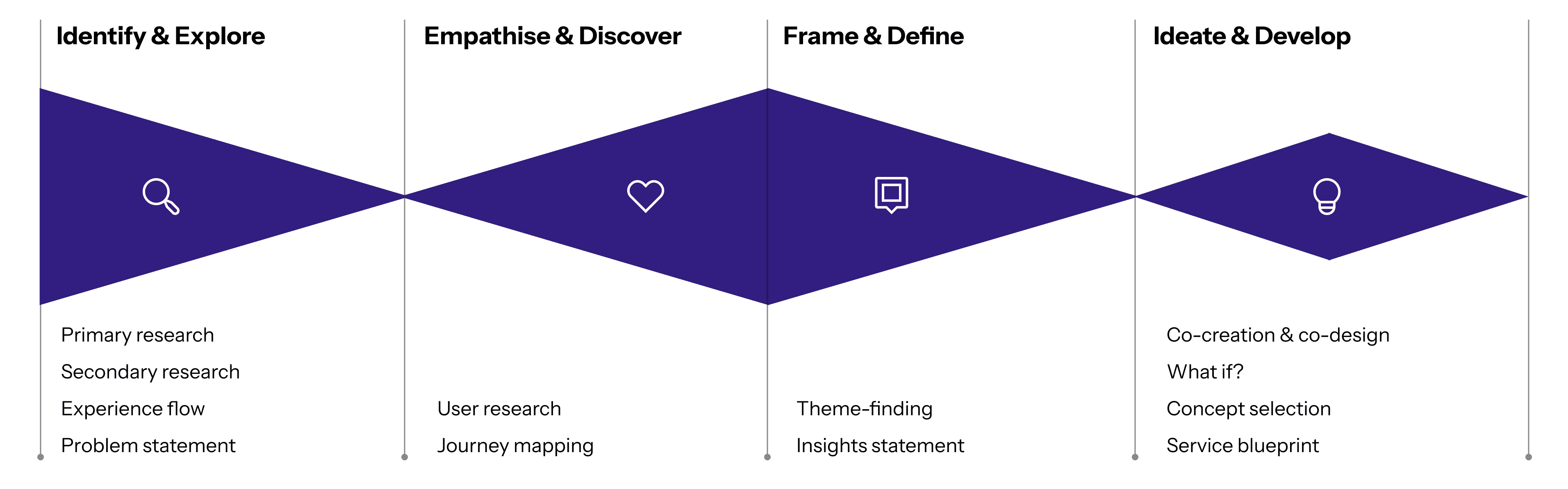
Our design process followed a structured design approach across four competition rounds:
OUR DESIGN PROCESS
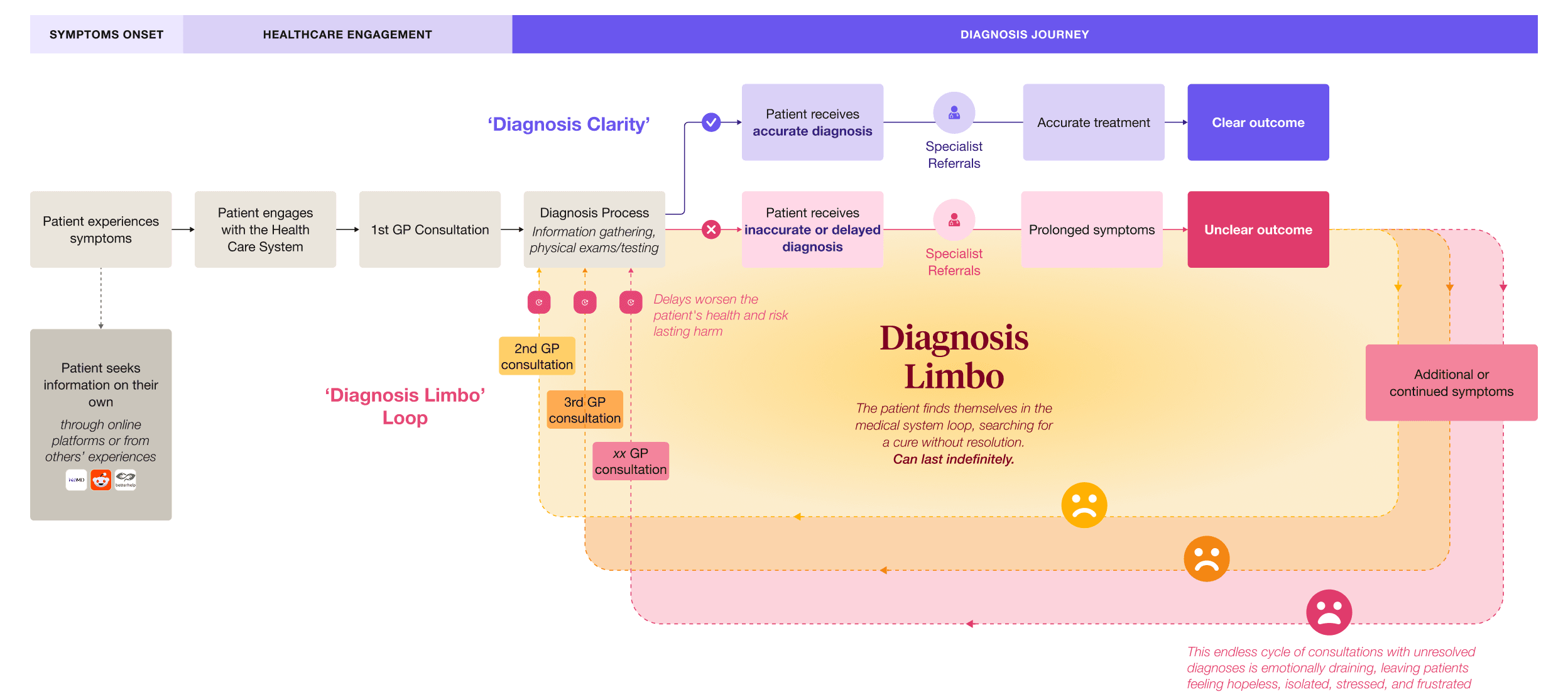
Our team conducted 20 in-depth interviews—15 with women in diagnosis limbo, 5 with physicians—to understand multiples sides of the system.
We found a fragmented journey. Caught in the "limbo loop", patients described "medical ping-ponging" across multiple providers, responsible for piecing together their own puzzle. When they couldn't keep up, physicians didn't get the full picture. The cycle repeated itself endlessly, with no one taking ownership of the patient's experience.
THE DIAGNOSIS LIMBO PATIENT JOURNEY
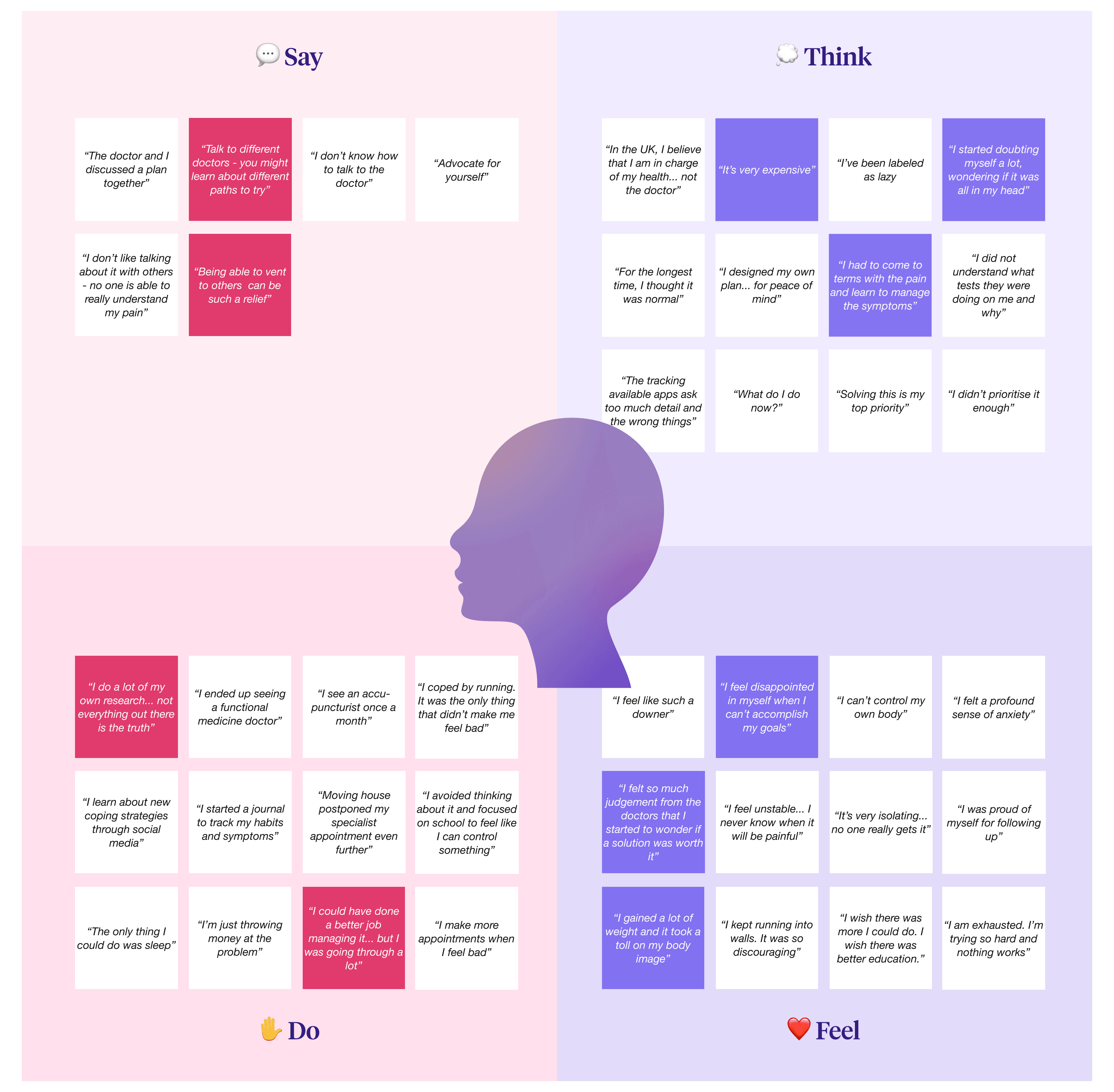
But here's what surprised us most: patients rarely talked about their physical symptoms. They focused on the mental and emotional toll—the exhaustion, the isolation, the feeling of being dismissed. Physical pain was just the surface; the real suffering was underneath. This became our key insight:
EMPATHY MAP FOR PATIENTS IN DIAGNOSIS LIMBO
Diagnosis limbo care focuses on physical symptoms. But mental and emotional support—the foundation patients need to navigate limbo long-term—is almost entirely missing.
We mapped their pain points across levels of control: what was personal and what was systemic. Most existing solutions focused on addressing physical symptoms, but almost nothing addressed the emotional realities of limbo.
PROBLEM MAPPING
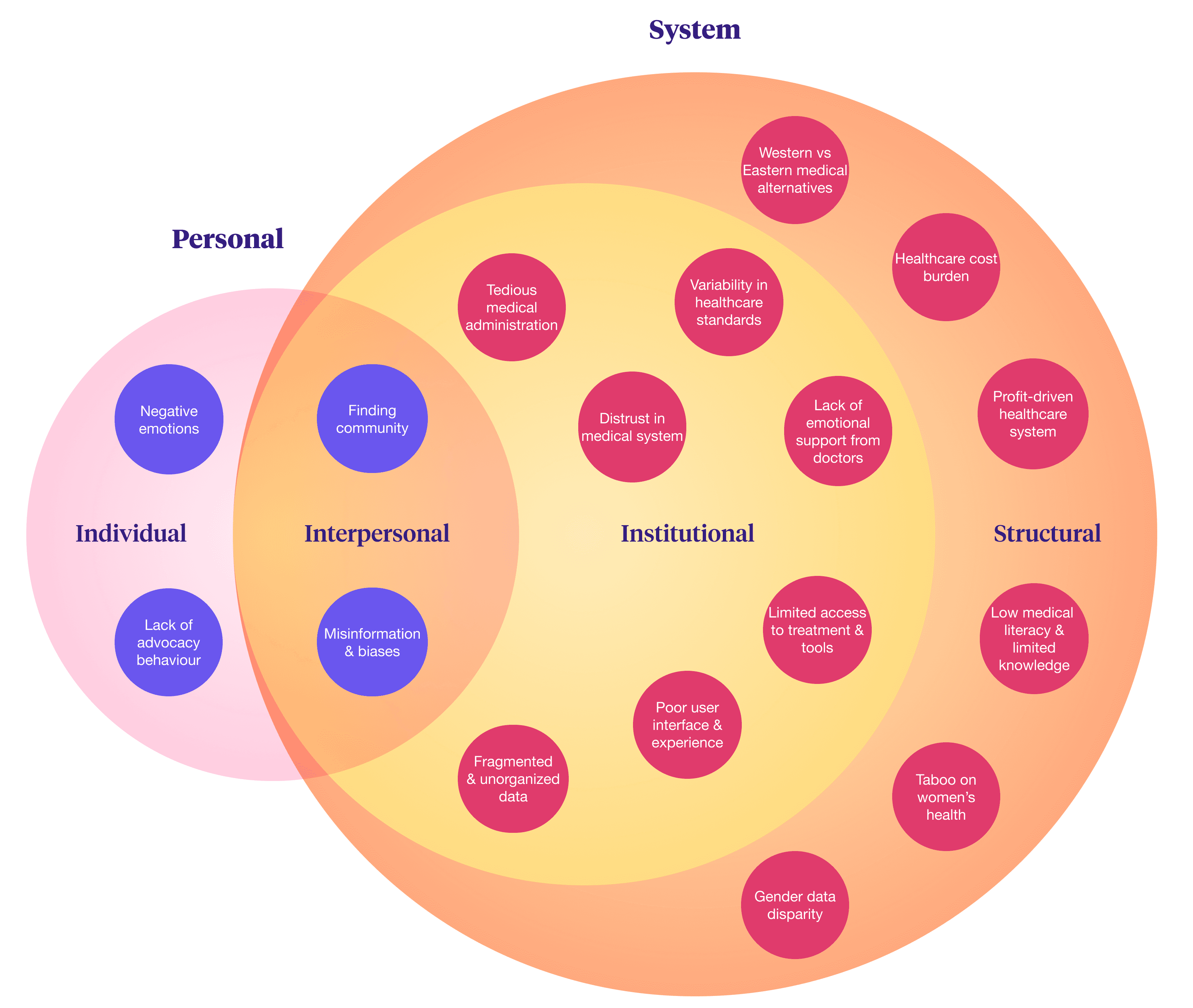
So we asked: What if we designed for the emotional journey, not just the medical one?
We brought interviewees back together for co-design workshops, asking them to imagine what support could look like if diagnosis limbo were treated with the same care and recognition as a diagnosis itself.
This led us to our solution: DiaLog.
DiaLog is an AI-enabled service that supports women in diagnosis limbo by reducing cognitive burden and improving care coordination.
DaiLog's Features
REPOSITORY & INSIGHT FEATURES
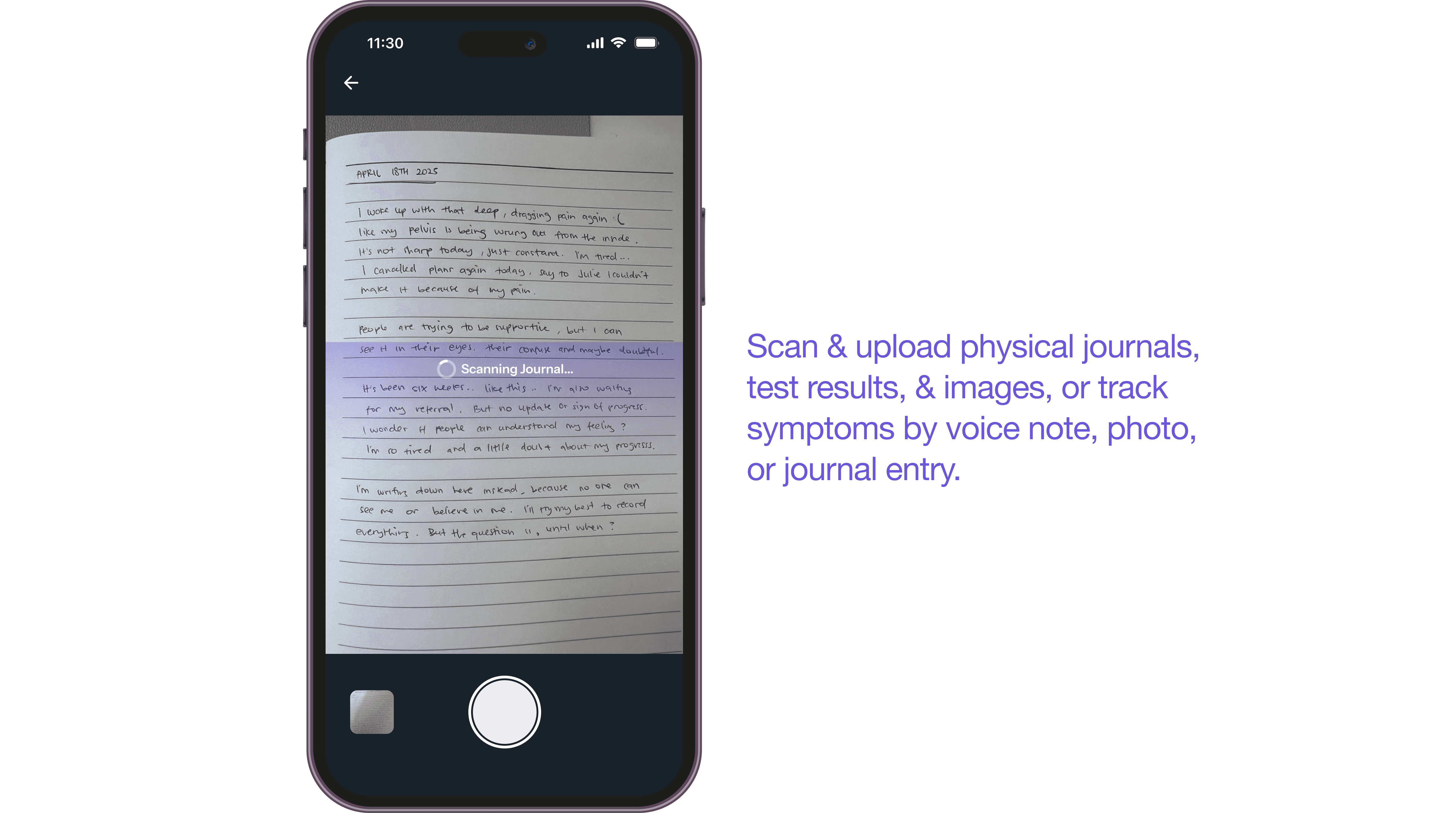
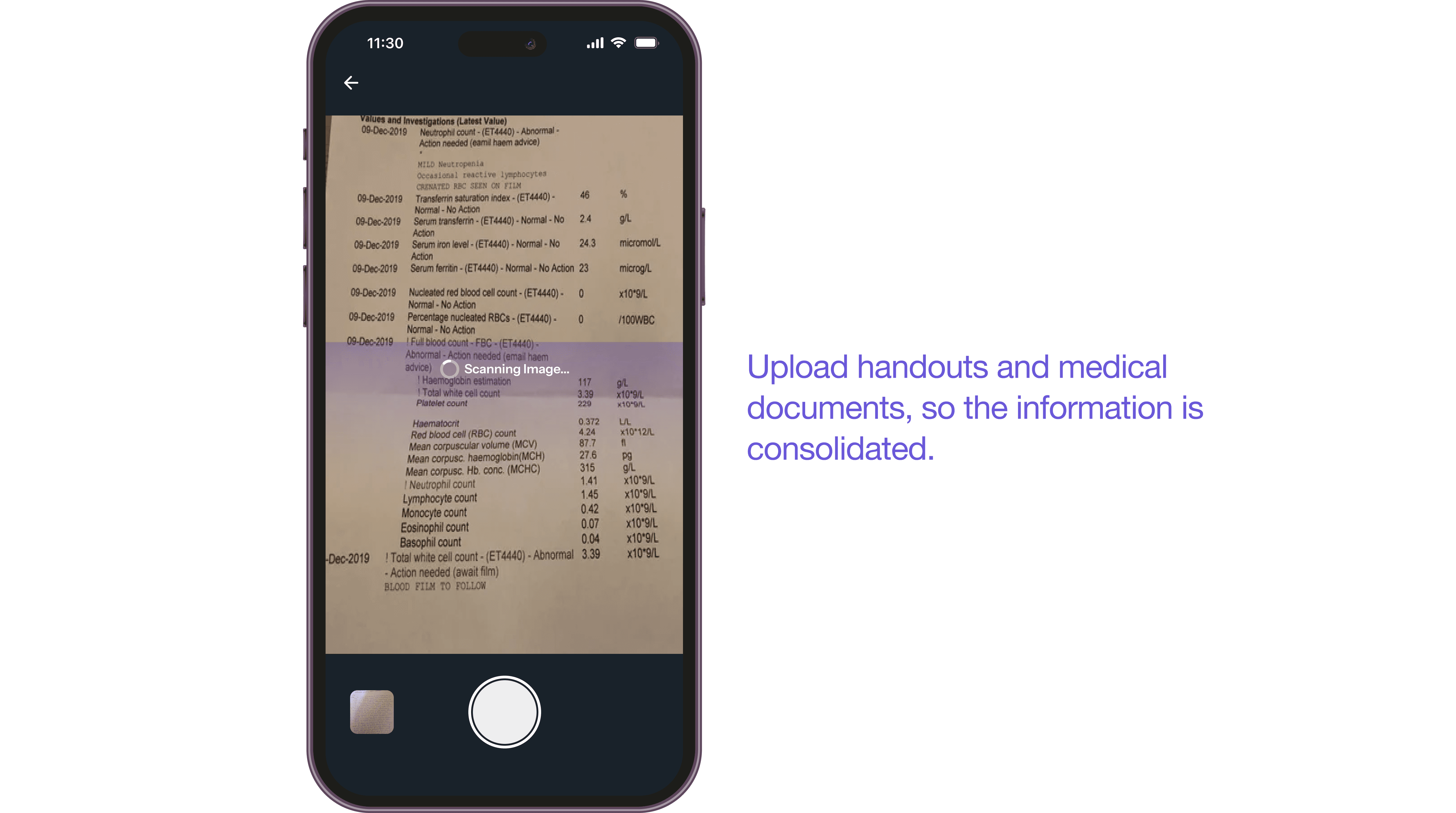
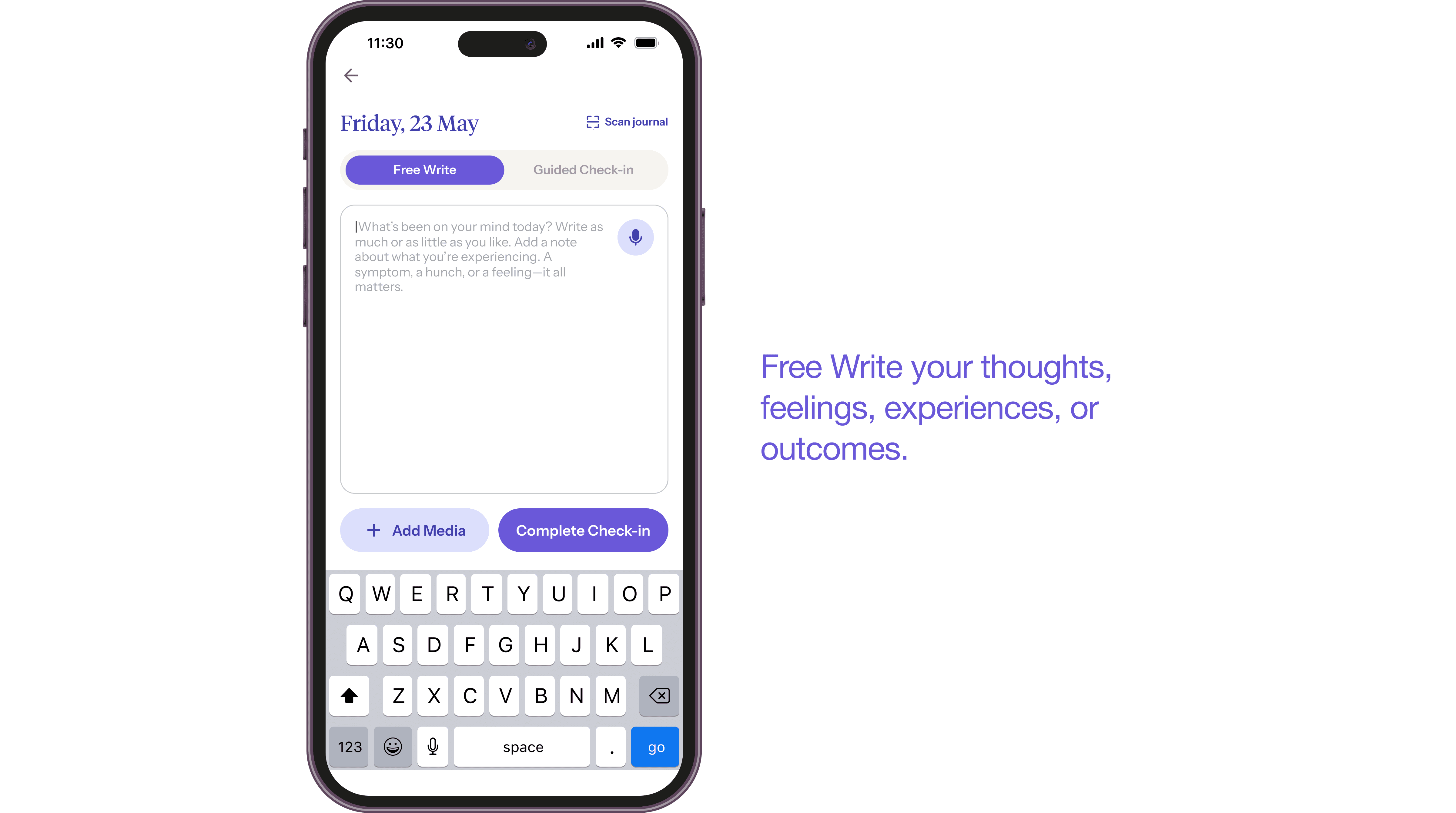
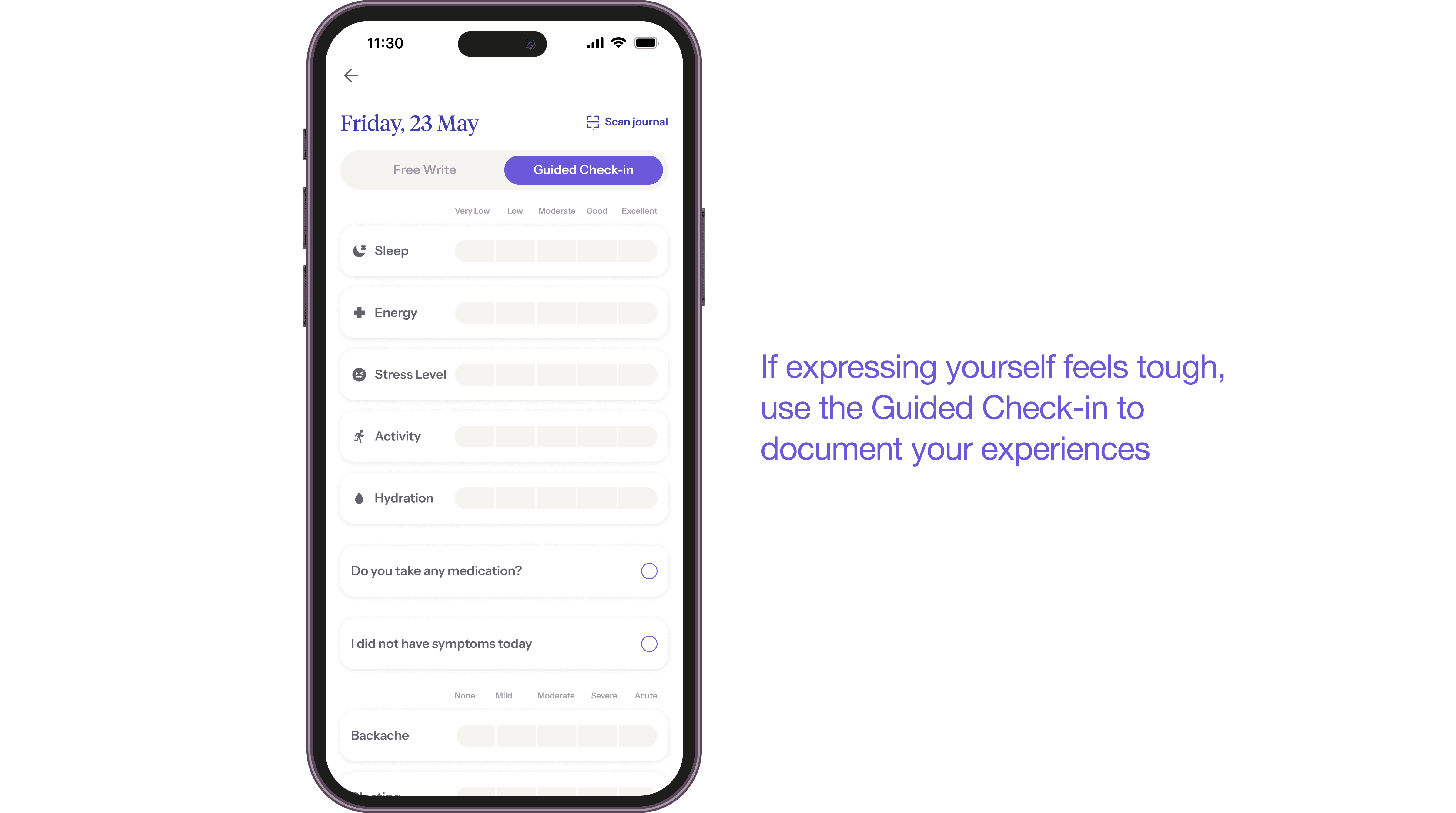
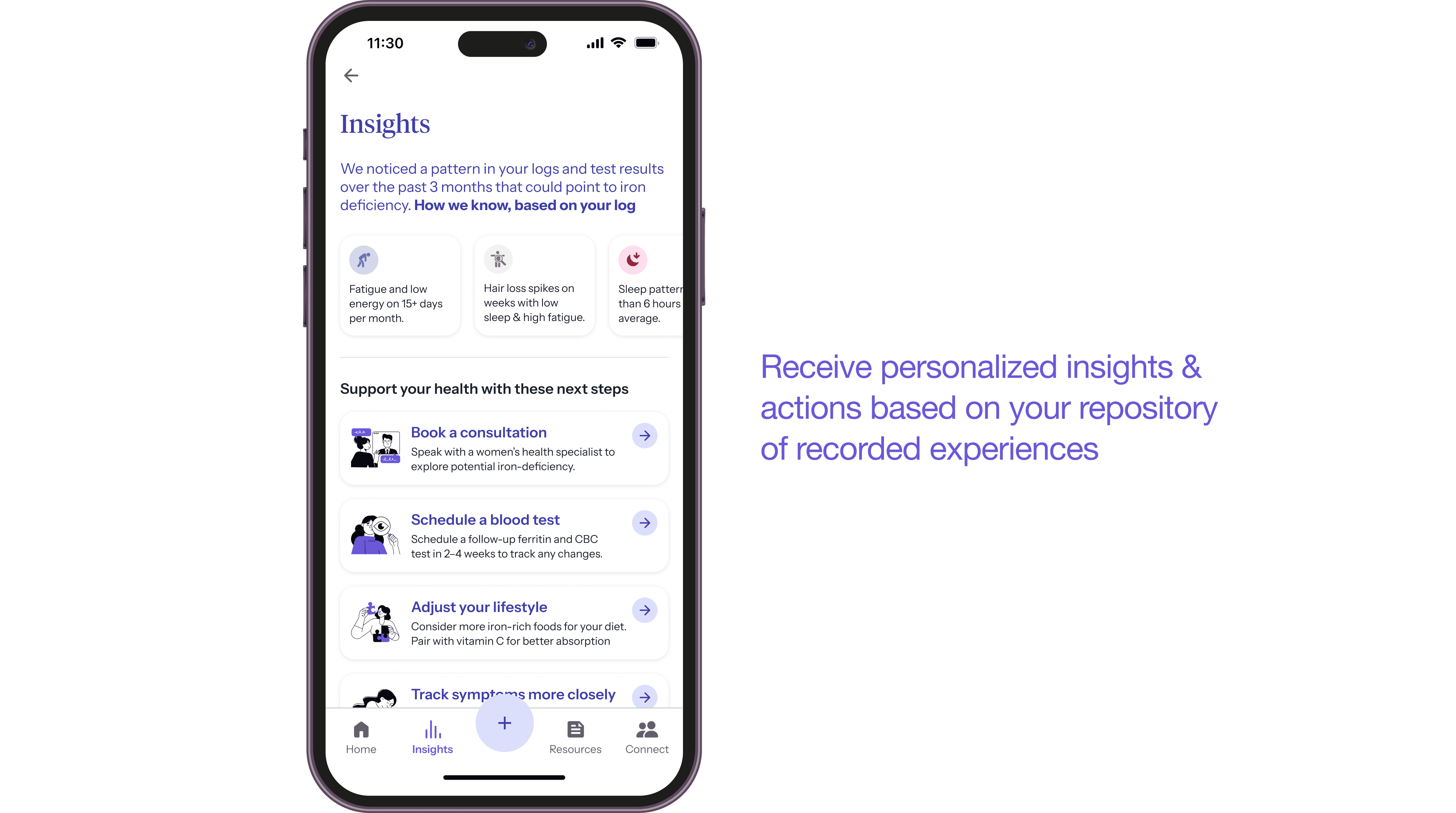
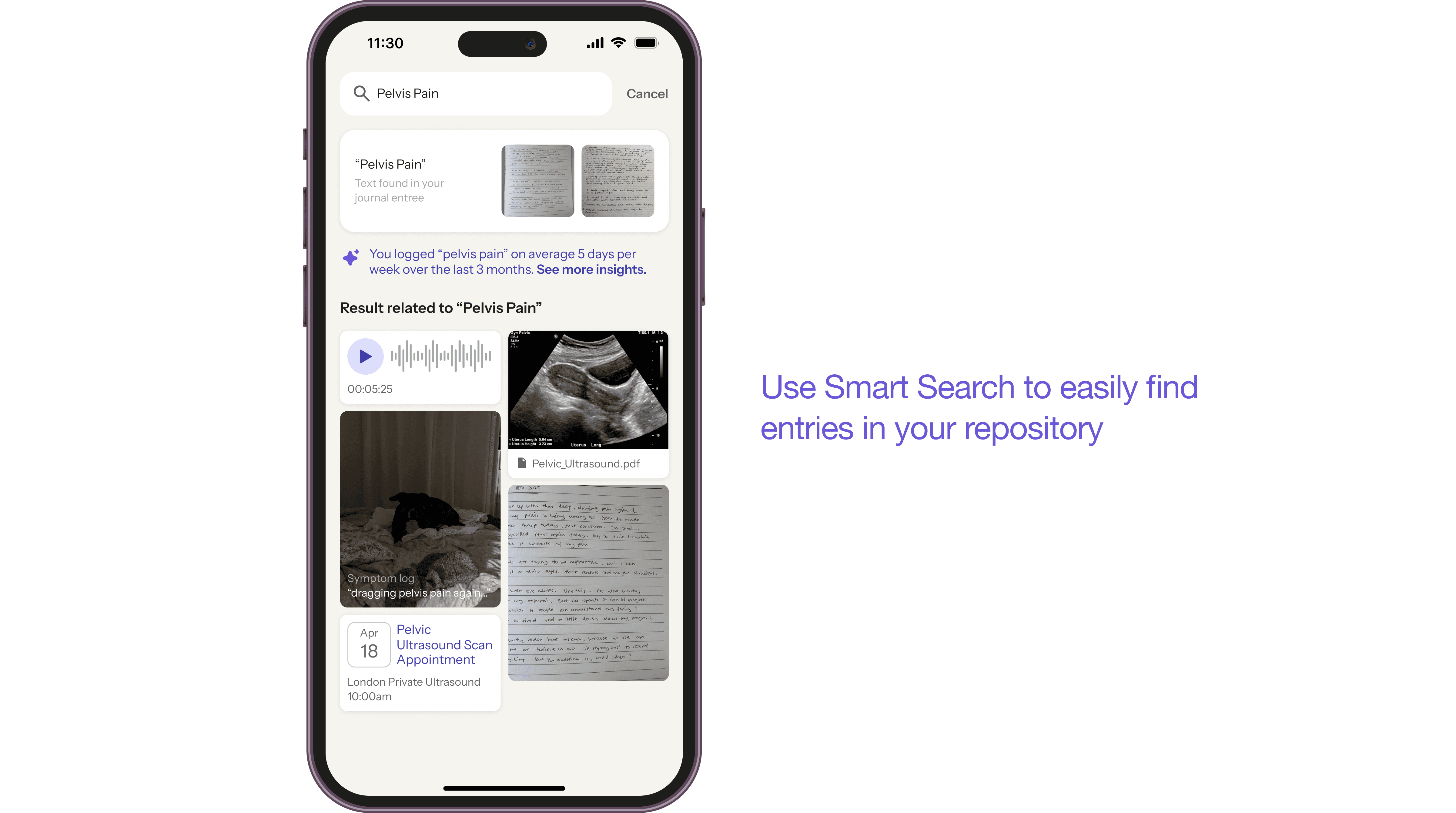
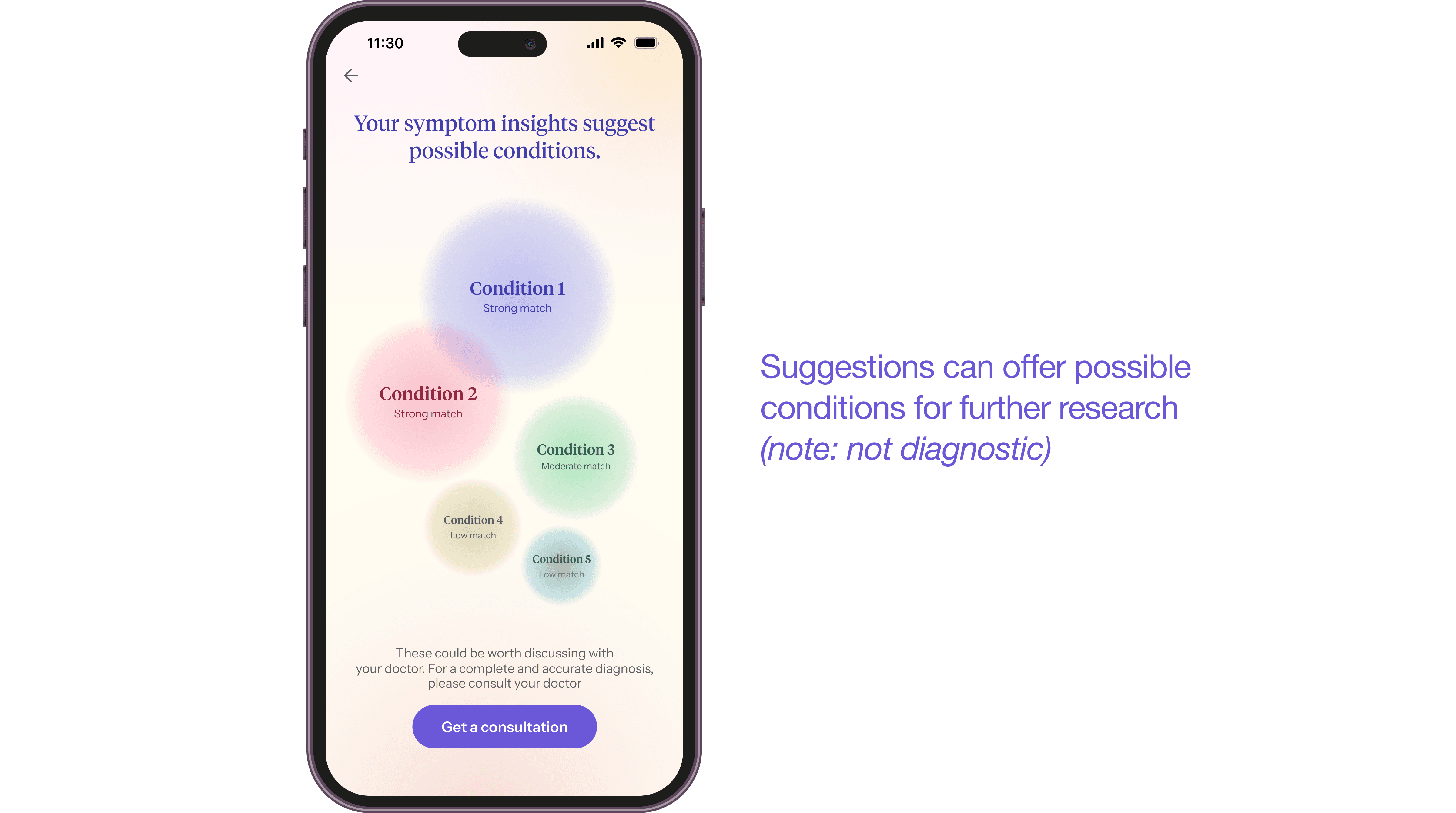
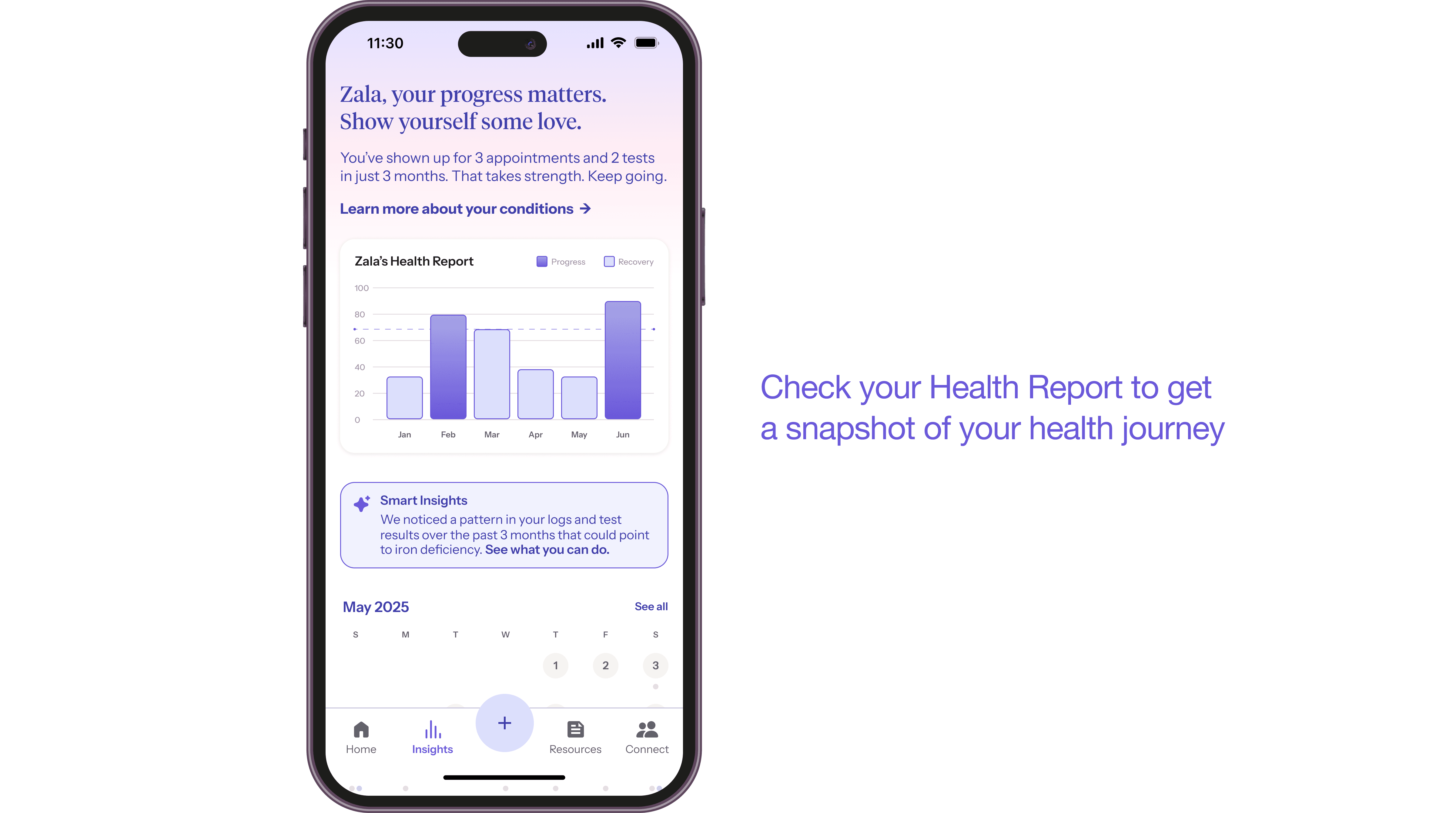
Patients document their experiences in whatever format feels right—voice notes, photos, text. These entries are consolidated into a repository, creating a single, searchable reference that unifies a fragmented medical journey. AI analyzes patterns and surfaces insights, helping patients experiment with self-care strategies rather than feel paralyzed by overwhelm.
RESOURCE FEATURES
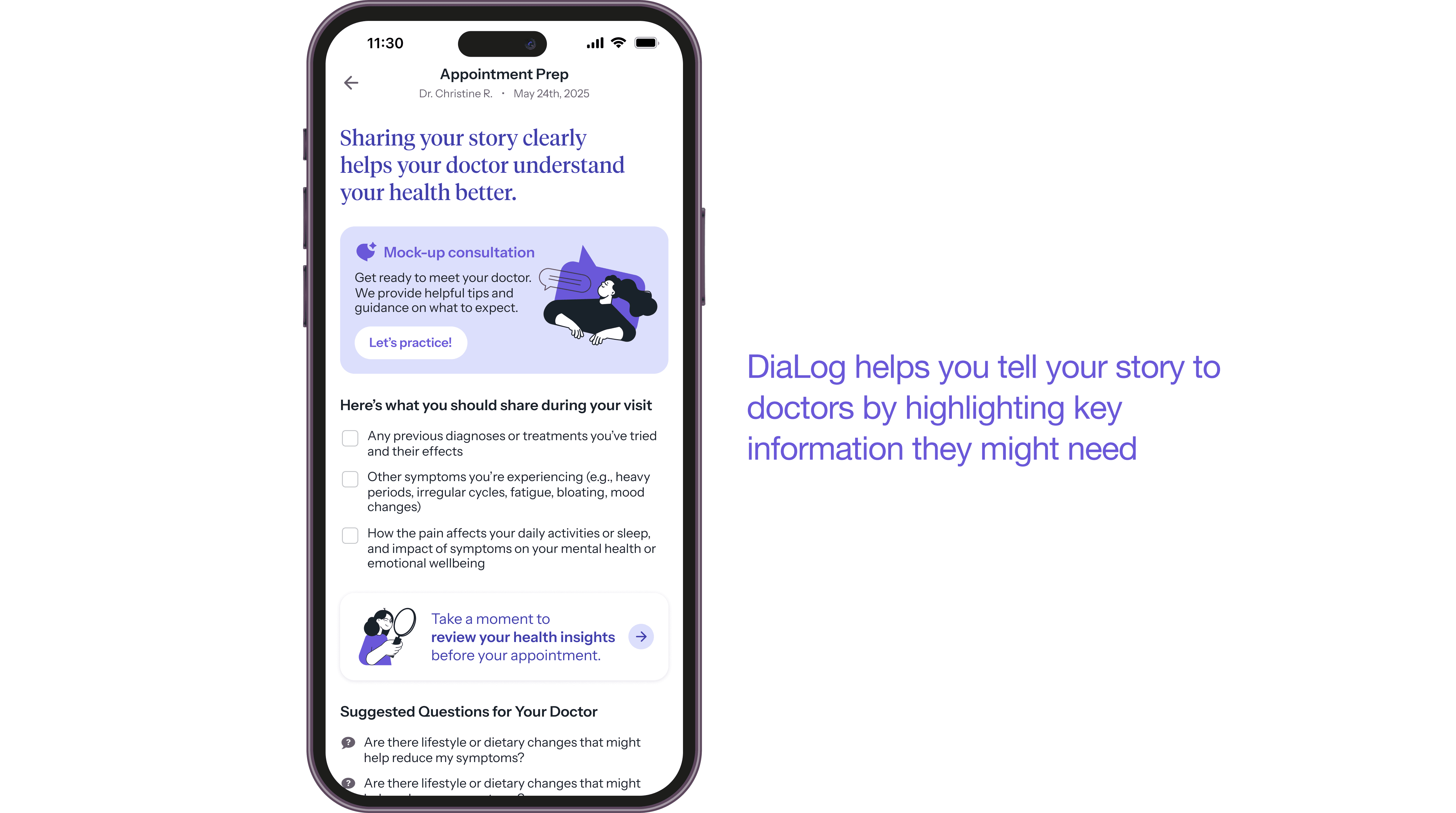
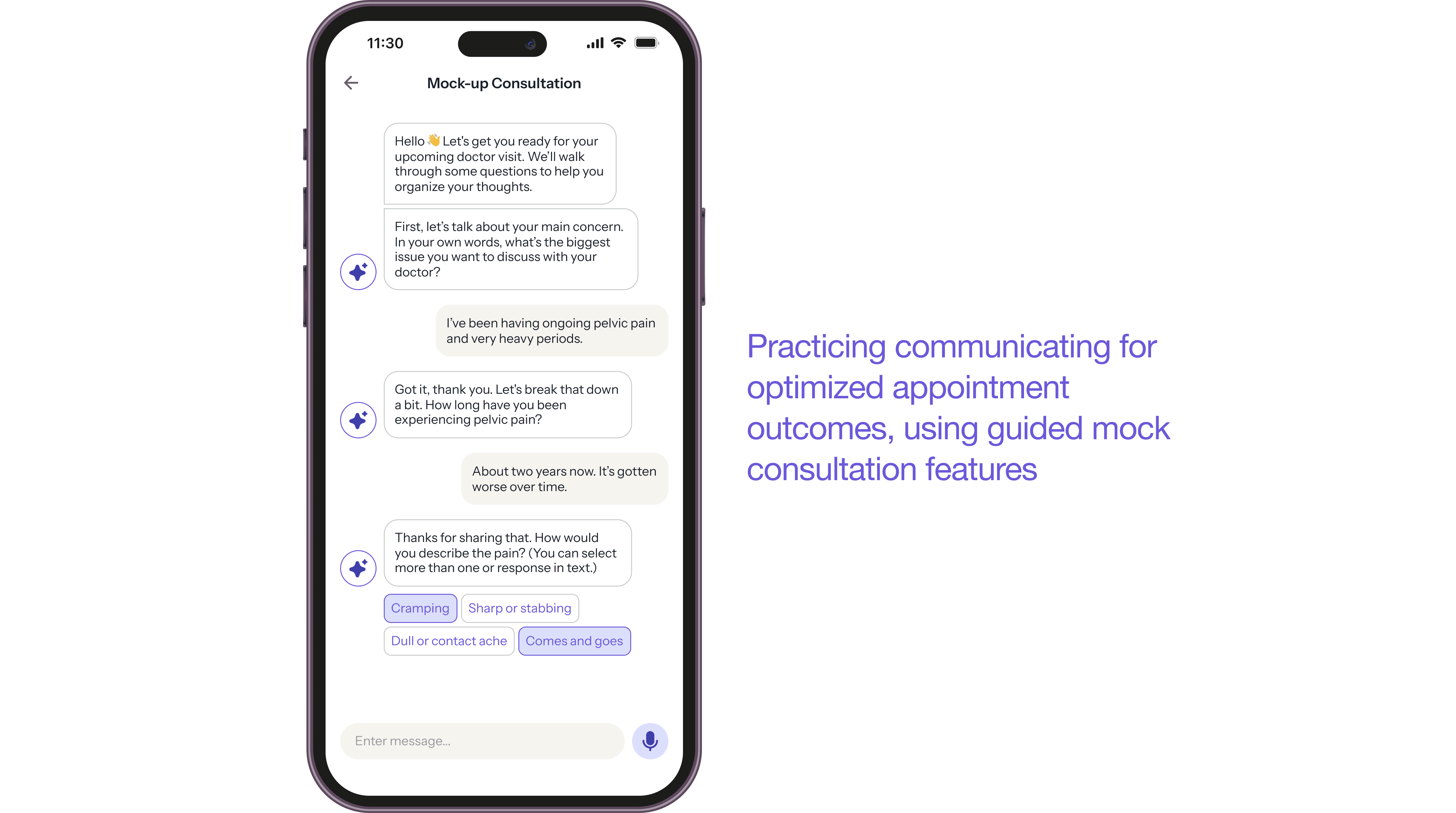
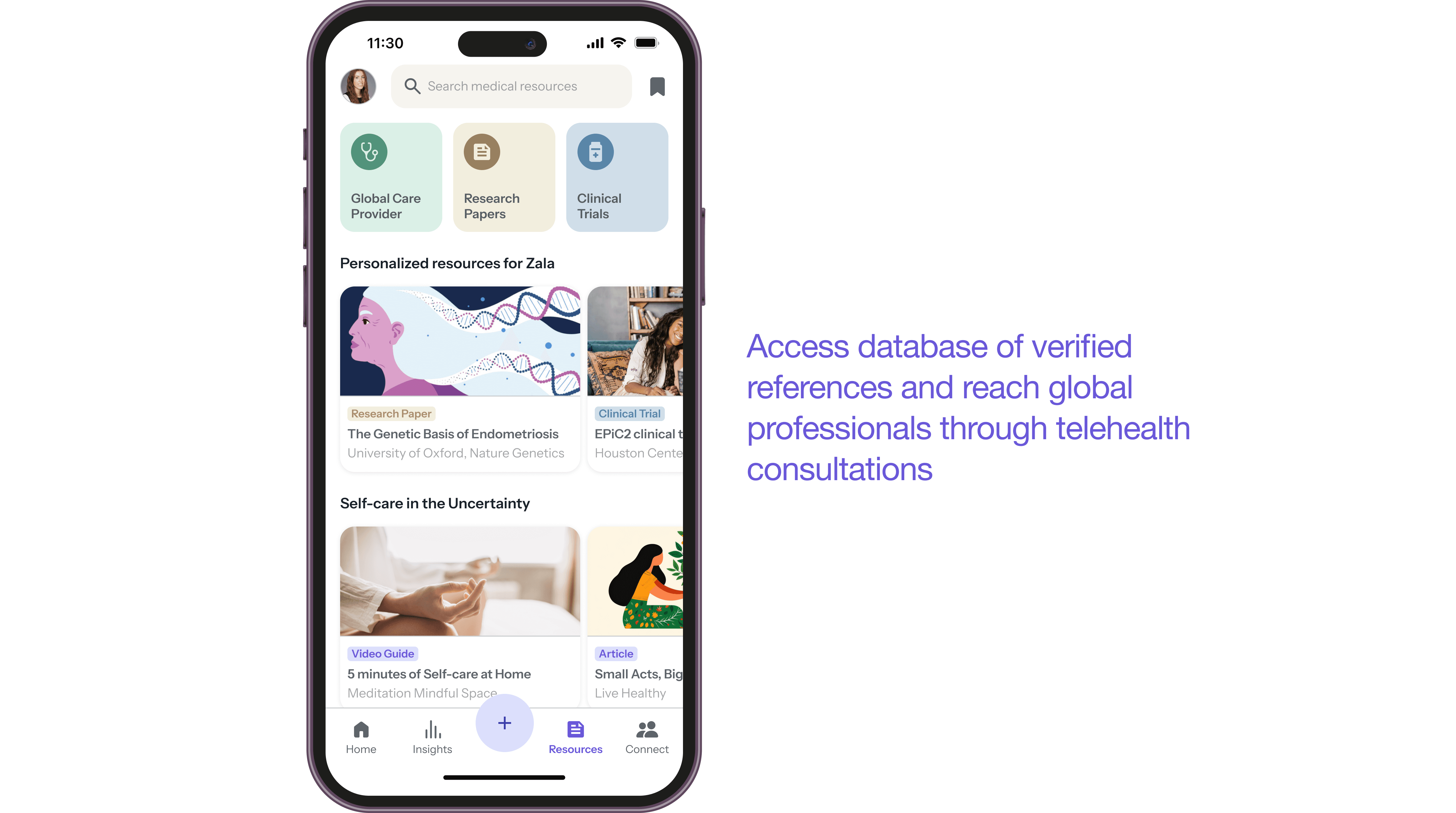
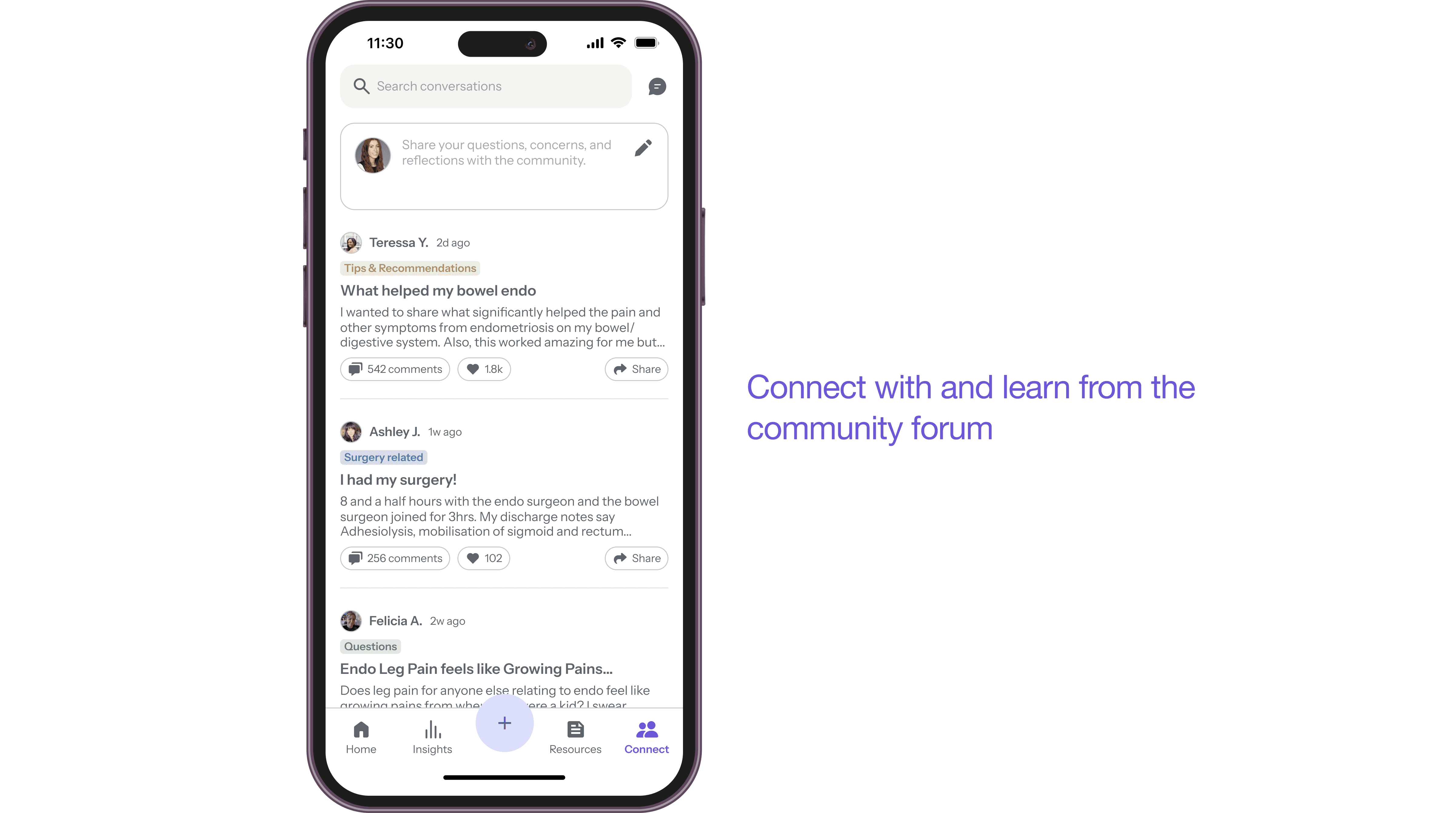
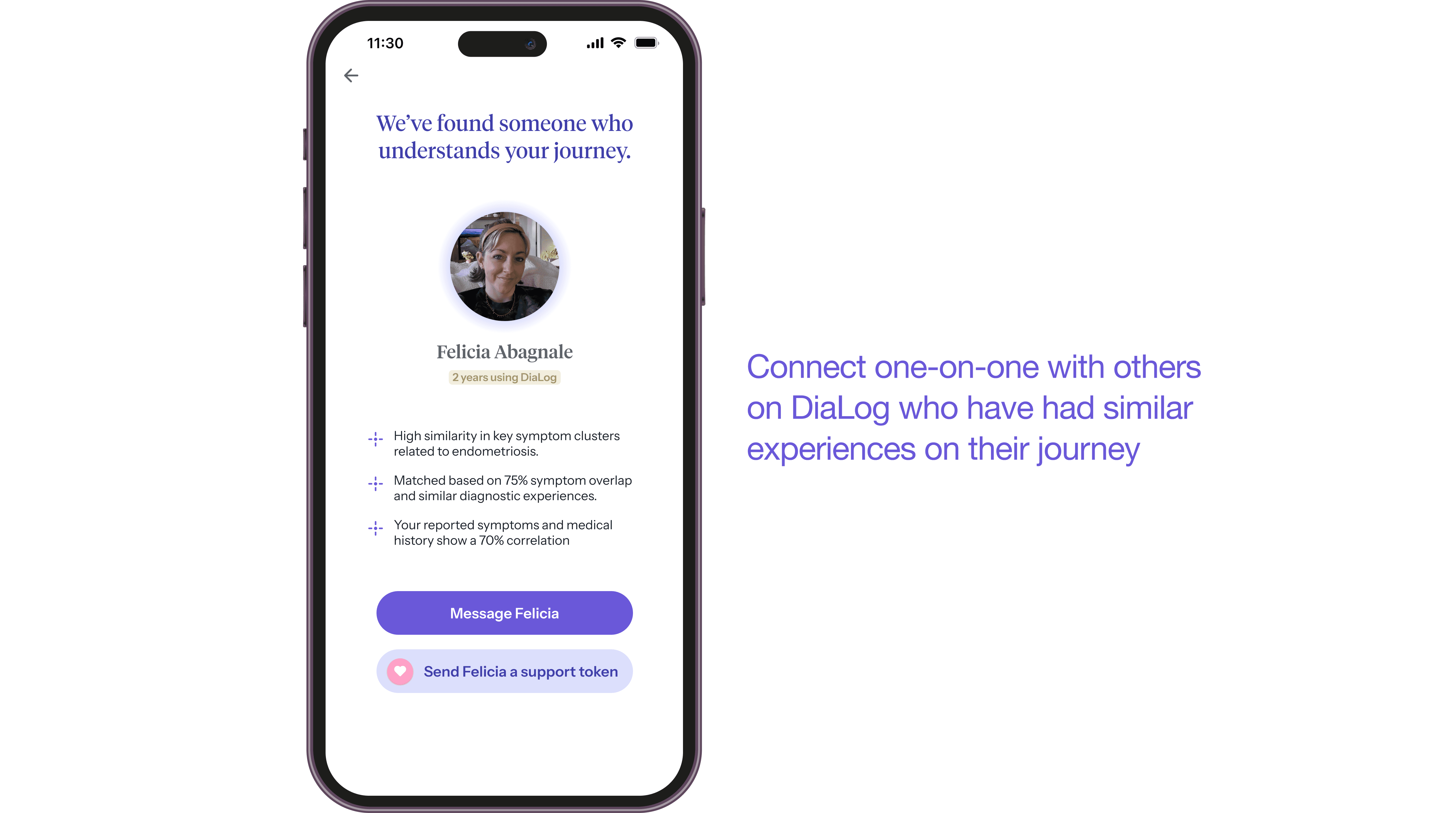
Verified medical knowledge and access to expert guidance help patients cut through unreliable online information. Resources like mock consultation prep, telemedicine, and peer community forums ensure patients aren't navigating limbo alone.
PHYSICIAN-SHARING FEATURES
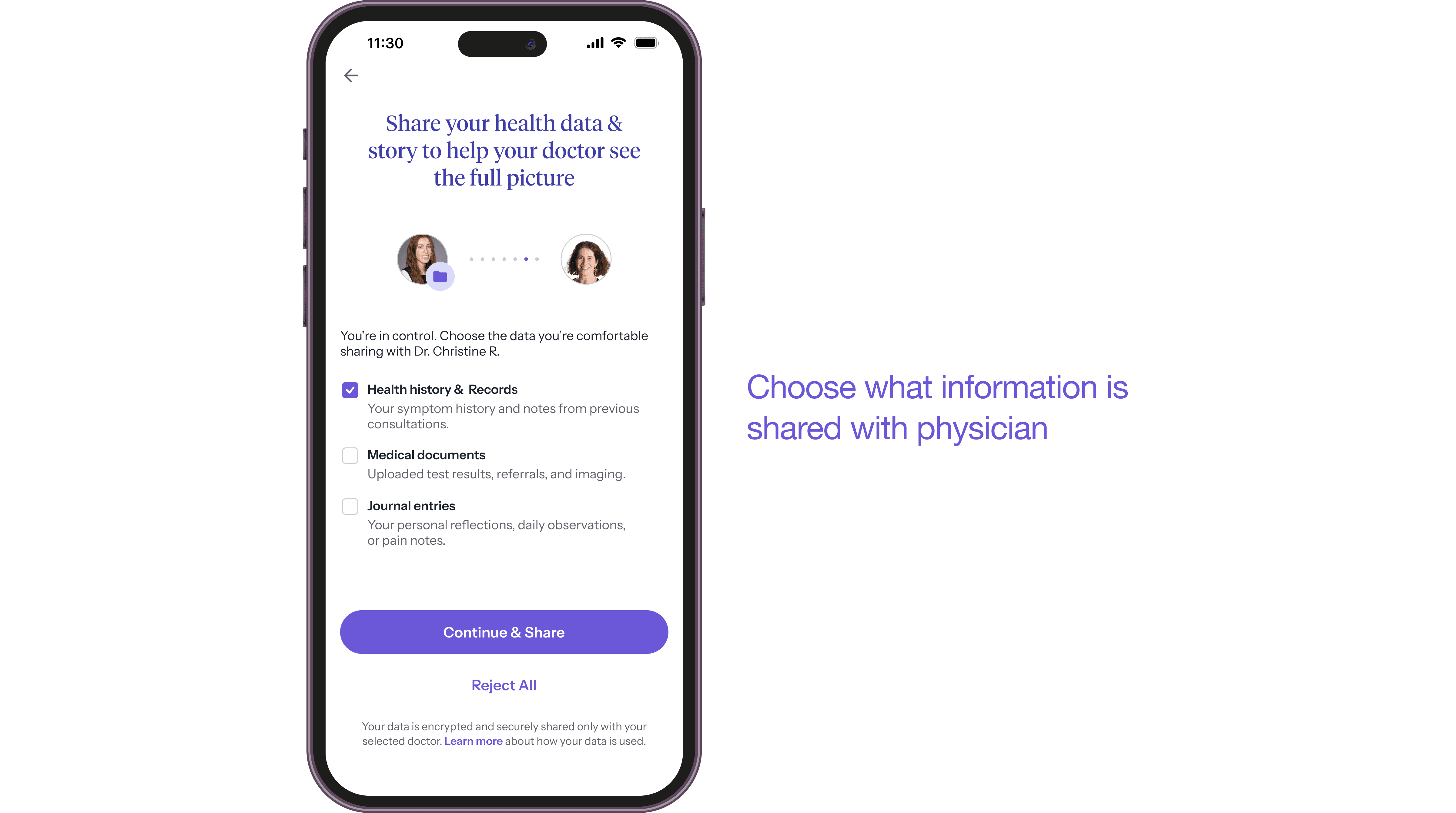
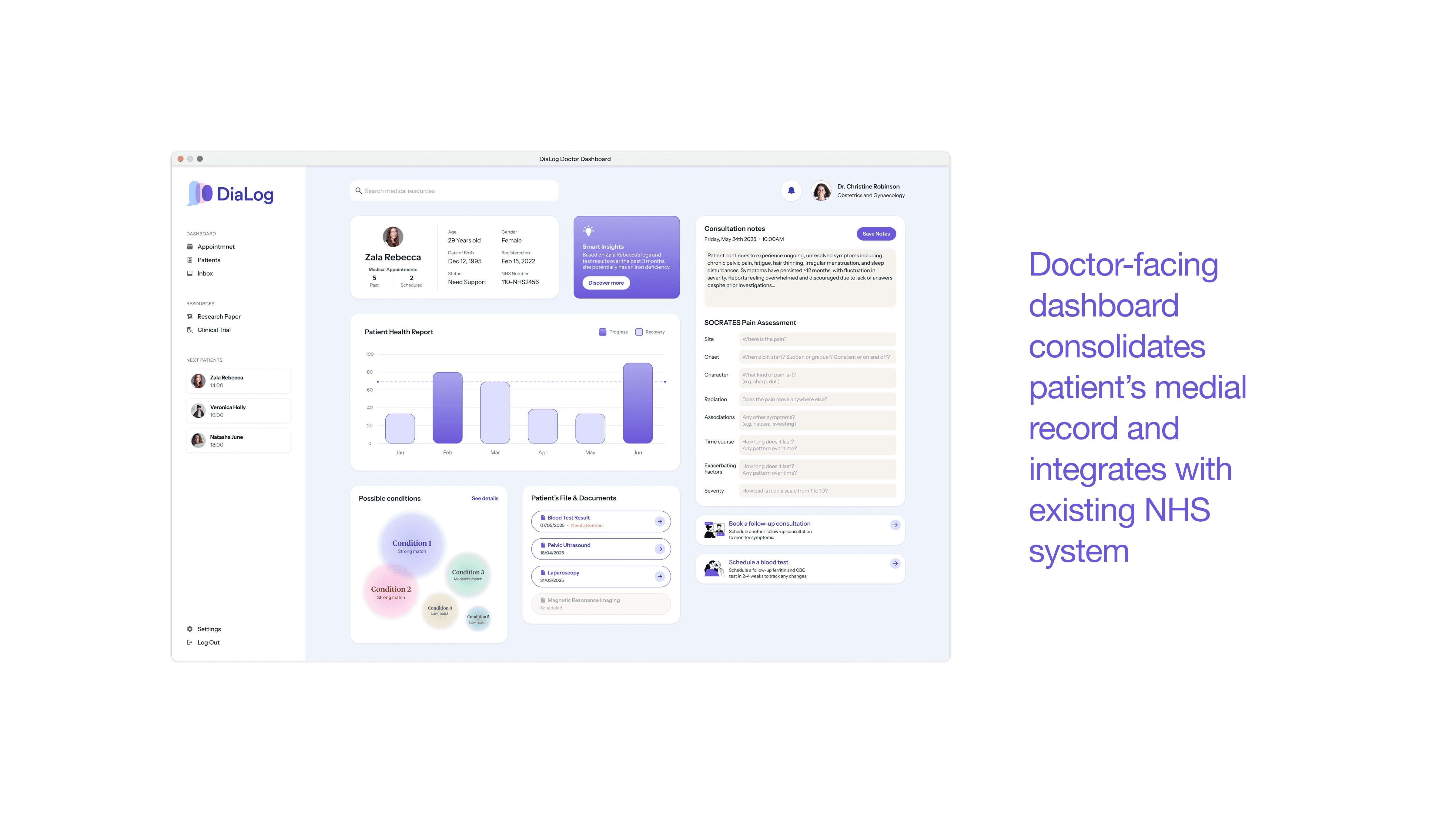
DiaLog isn't just a patient solution. It's an ecosystem connecting patients, physicians, and the NHS, with wearable integration and clinical workflow support. Patients choose what elements of their journey they share, and that information is presented to physicians in a way that's quick and easy to understand.
SERVICE BLUEPRINT
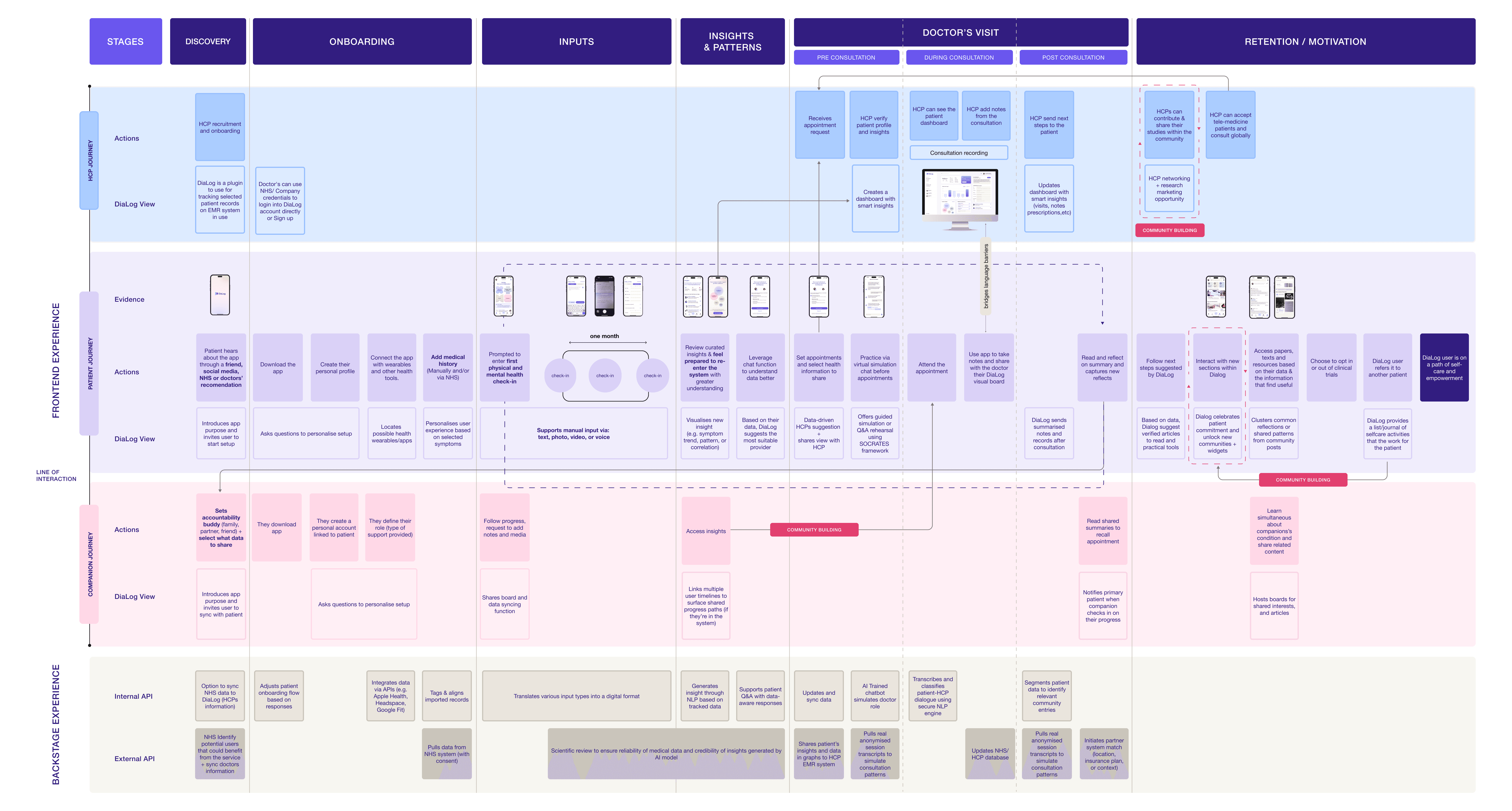
The service blueprint shows how all the pieces work together. Patient interactions in the app connect to backend infrastructure—wearable devices, AI processing, physician dashboards, and NHS system integration.
What Makes DiaLog Different
DiaLog makes an invisible population visible. Diagnosis limbo has no medical code, no standard care protocol. It's a gap in the system where 5.8 million UK women fall through. DiaLog reframes it as a legitimate condition worthy of care and attention.
While existing solutions focus on symptom tracking, DiaLog addresses the full lived experience. By designing for emotional resilience alongside physical documentation, it bridges the gender health gap with measurable psychological and systemic benefits.
And critically: it was designed with people in diagnosis limbo, not for them. Through co-creation workshops with patients and physicians, DiaLog reflects the real needs of those living this experience every day.
DiaLog won first Philip's Student Service Design Challenge as well as the Service Design Network's 2025 Best Student Project. It's currently in Philips' 8-week incubation program, moving toward real-world implementation.
In testing, a patient with four years of diagnosis limbo experience told us, "I would put all my notes and medical references into DiaLog if it existed. It simplifies things a lot." One NHS medical doctor said, "DiaLog will allow patients to feel satisfied in their approach to their illness and help build better interpersonal relationships, which invariably leads to better healthcare."
Testing confirmed users need DiaLog. Our business model proves it's viable to build.
SUSTAINABLE BUSINESS MODEL CANVAS
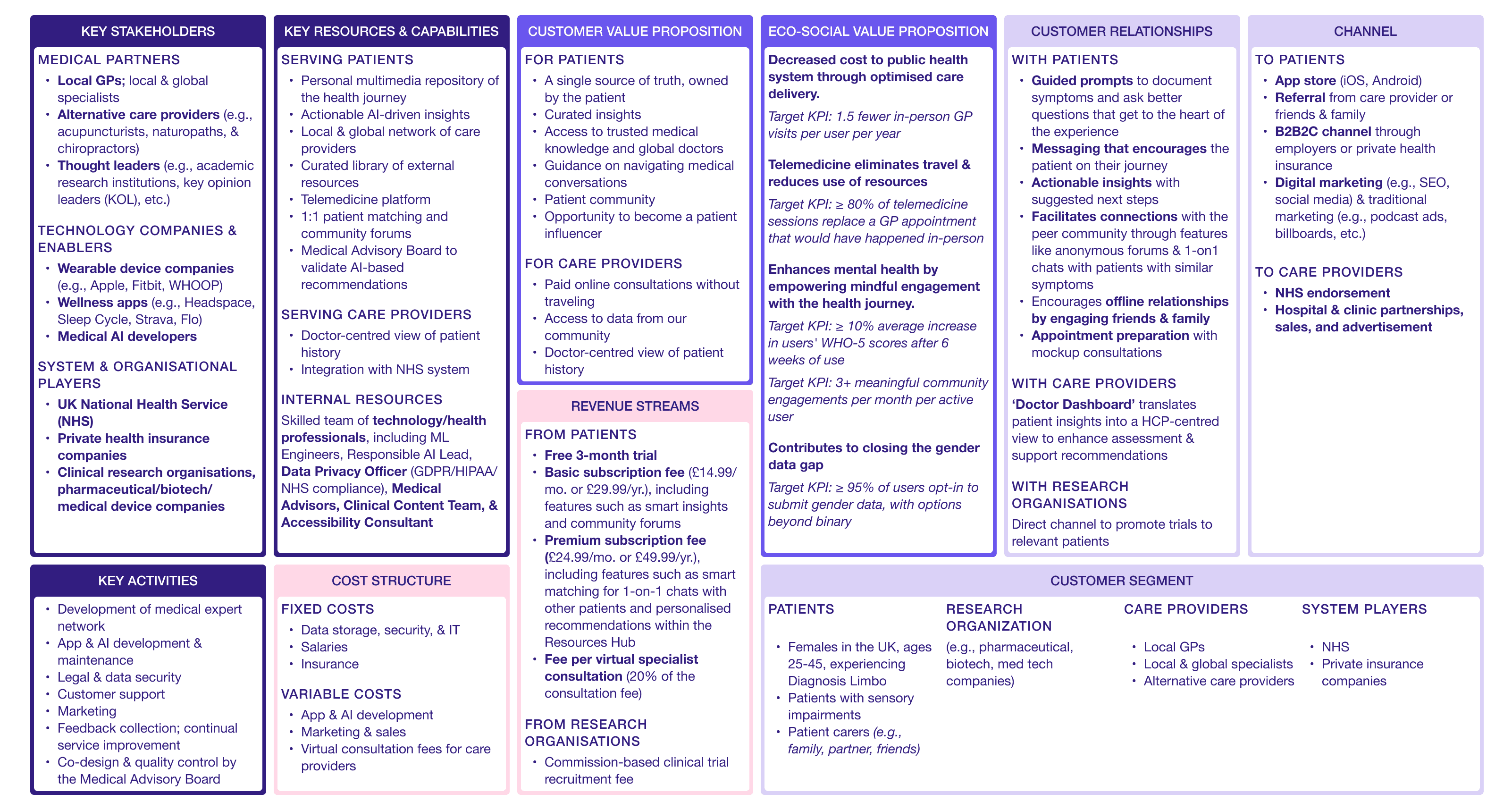
Our business model projects up to £81M in annual revenue while creating measurable value for patients, physicians, and society. Unlike traditional business models, we designed for ecosocial value—measuring impact not just in revenue, but in psychological wellbeing, healthcare system efficiency, and closing the gender health gap.
Through Philips' incubation program, we're refining the service model, exploring NHS integration pathways, and validating technical feasibility with healthcare stakeholders. DiaLog is moving from concept to reality—giving diagnosis limbo the recognition and care it deserves.
NEXT WORK
Selected Confidential Projects
Systems-oriented research, analysis, strategy, and service design across healthcare, energy, & mobility.